
2026-09-19 · Dale Mercer
Water Heater Sediment Buildup
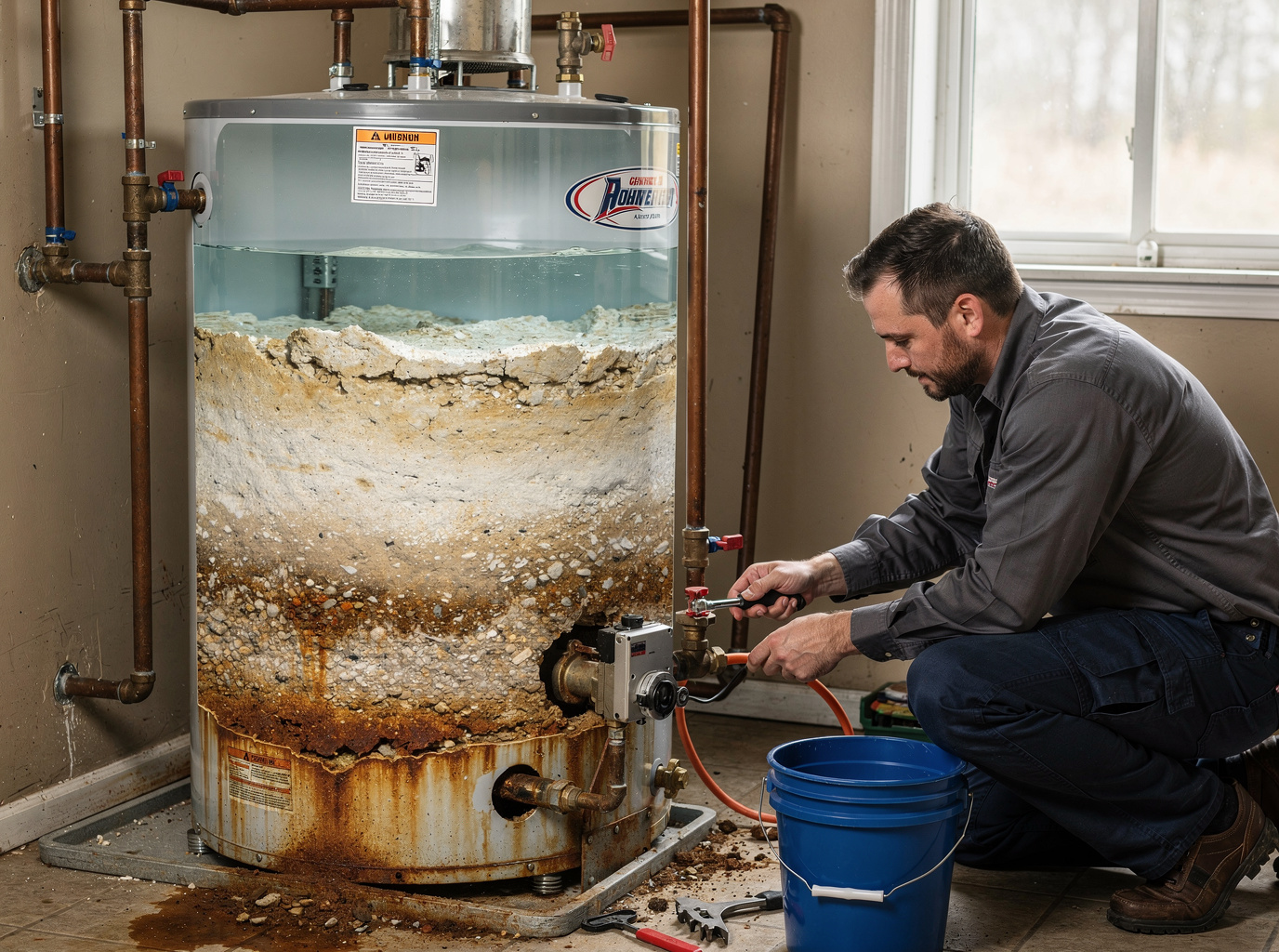
Sediment buildup begins affecting water heaters in Johnstown within three to five years, especially in homes drawing from Weld County sources where dissolved minerals settle quickly in the tank bottom.
Causes of Sediment in Local Tanks
Johnstown sits in a semi-arid region with hot summers that increase household hot-water demand. Higher usage draws more groundwater carrying calcium and magnesium, which precipitate as scale when heated. Older housing stock in Downtown Johnstown often features 40- and 50-gallon tanks installed ten or more years ago; these units collect rust flakes from galvanized pipes alongside mineral sediment. Proximity to St. Vrain State Park means some wells pull water with slightly higher iron content, speeding the layer that forms on the bottom. Hot summer temperatures also encourage more frequent showers and laundry, moving additional sediment into the tank each month. In contrast, winter brings lower demand but colder inlet water that can shock the tank and loosen existing scale. Residents in nearby Milliken and Loveland report similar patterns because they share the same regional aquifer influences.
Visible Signs and Performance Drops
Homeowners notice rumbling or popping sounds during heating cycles once sediment reaches roughly an inch thick. Reduced hot-water volume follows, with showers cooling faster than expected even on 50-gallon units. Water may appear cloudy or carry small grit particles at the tap. In severe cases the lower heating element or gas burner works harder, raising energy use noticeably on monthly bills. These symptoms appear earlier in Downtown Johnstown homes with original plumbing from the 1990s. Checking the drain valve for sandy discharge during a quick test gives an immediate indication of buildup level. Persistent issues often lead to leaks at the tank bottom, prompting a visit to the Leaking Water Heater Repair guide for next steps.
Flushing Steps That Match Local Conditions
Begin by turning off power or gas and closing the cold-water inlet. Attach a hose to the drain valve and open it fully, allowing the tank to empty into a safe outdoor area. Refill partially, then drain again to stir and remove loosened sediment. Repeat until water runs clear, typically three cycles for Weld County mineral loads. Perform this during cooler months when demand is lower so the household is not without hot water long. After flushing, restore power and check for leaks at every connection. Homeowners who follow the schedule outlined in How Often Should You Flush a Water Heater keep tanks cleaner longer. Those uncomfortable with gas lines or electrical components should schedule the Water Heater Maintenance & Flushing service instead.
When Replacement Becomes Necessary
If flushing fails to restore adequate hot water or the tank shows visible corrosion around seams, replacement is the practical next step. Tanks in Johnstown typically reach the end of reliable service between eight and twelve years when sediment has been managed. Newer high-efficiency models handle the region's hard water better and pair well with tankless conversions for growing households. Properties in Pioneer Ridge or Thompson River Ranch often choose 50-gallon or larger units to serve multiple bathrooms. Always verify inlet water temperature and pressure before selecting a replacement to avoid short-cycling. Professional installation ensures proper venting and seismic strapping required in Weld County.