2026-09-19 · Dale Mercer
What Size Water Heater Do I Need
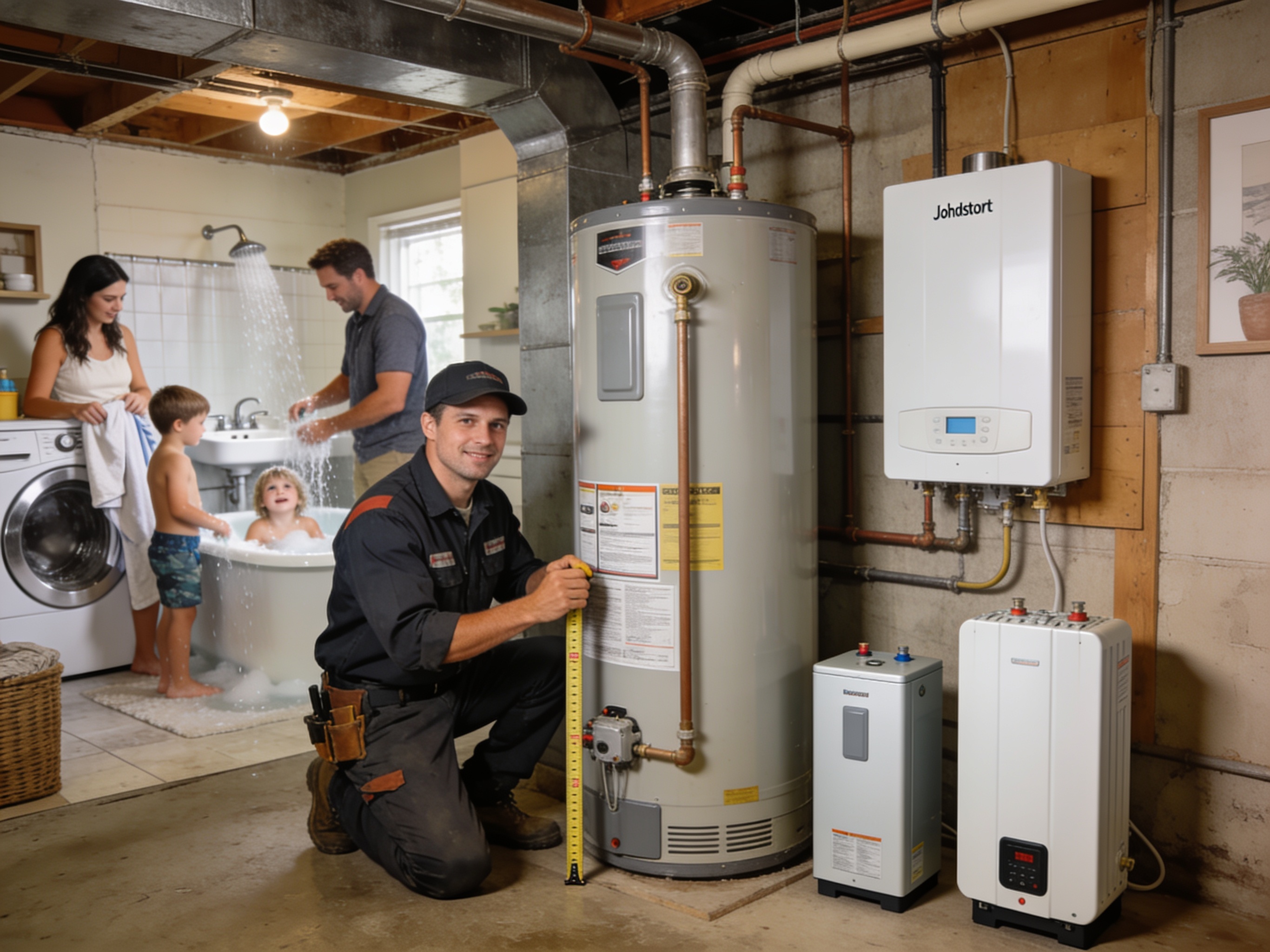
For most homes in Johnstown, a 40- to 50-gallon water heater meets the needs of a family of four, but larger households or those with high hot water demand may require 60 gallons or more. Local housing stock in areas like Downtown Johnstown often includes single-family homes built between the 1980s and early 2000s, where original units were typically sized for two to three bathrooms. Semi-arid conditions with hot summers increase shower frequency and laundry loads, pushing many residents toward the higher end of that range. Terrain in Weld County features harder water that can shorten tank life, so accurate sizing prevents both shortages and premature failures.
Matching Size to Household Demand
Start by counting bedrooms and bathrooms rather than just occupants, because guests and teenagers create simultaneous draws that a marginal unit cannot handle. A three-bedroom home in Pioneer Ridge or Carlson Farms usually runs two showers plus a dishwasher cycle in the morning, requiring at least 50 gallons of recovery capacity. Larger properties near Thompson River Ranch with four or more bathrooms often need 65- to 80-gallon tanks or a tankless system rated for 7-9 gallons per minute. Track peak usage for one week by noting how often the water runs lukewarm; that data directly informs whether you need to upsize or switch technologies.
Local Climate and Water Conditions in Weld County
Hot summers in Johnstown drive higher overall consumption compared with cooler Front Range cities like Loveland or Milliken, where irrigation and outdoor chores compete less with indoor hot water. The semi-arid climate also concentrates minerals in the supply, accelerating sediment buildup inside tanks. This makes flushing more critical here than in softer-water regions, and it shortens the effective lifespan of undersized units that cycle harder to meet demand. Homes on well water or older municipal lines in Downtown Johnstown sometimes see faster scale formation, so choosing a slightly larger tank or a model with better heat transfer surfaces offsets those local conditions.
Tank Versus Tankless Options for Johnstown Homes
Many residents compare traditional tanks against tankless models when their current unit fails, especially in neighborhoods with limited mechanical space. A standard 40-gallon tank occupies floor space that some Downtown Johnstown basements cannot spare, while a tankless unit mounted on an exterior wall frees room and supplies endless hot water during summer heat waves. Energy savings appear in the first year for homes that use under 40 gallons daily, but families running multiple fixtures simultaneously benefit more from a high-recovery tank. Review the differences in recovery rates and venting requirements before deciding.
When Replacement Makes Sense Over Repair
If your existing heater is 8-12 years old and struggles to keep up during peak summer mornings, replacement usually costs less than repeated service calls. Undersized units in older Downtown Johnstown homes often show up as lukewarm water at the farthest fixture or frequent temperature swings. Pairing the new size calculation with a maintenance plan prevents the same mismatch from recurring. Local service records show that properly sized replacements in Weld County last longer when flushed on schedule and matched to actual fixture counts rather than guesswork.